EDP 7000 electrodeposition system
Accurately and thoroughly determining the level of exposure to radioisotopes—both for individuals and the environment—is a critical factor in developing a course of action and making subsequent decisions once contamination has been identified (whether through medical examination or suspected exposure). This type of measurement, used in medical radiology, is frequently performed following medical evaluations of individuals who have been exposed to isotopes. In the process of measuring a given isotope, the initial, indispensable step is its capture and accumulation onto a substrate. Currently, electrodeposition is the most effective method for capturing radioactive elements present in a solution.
Operating Principle
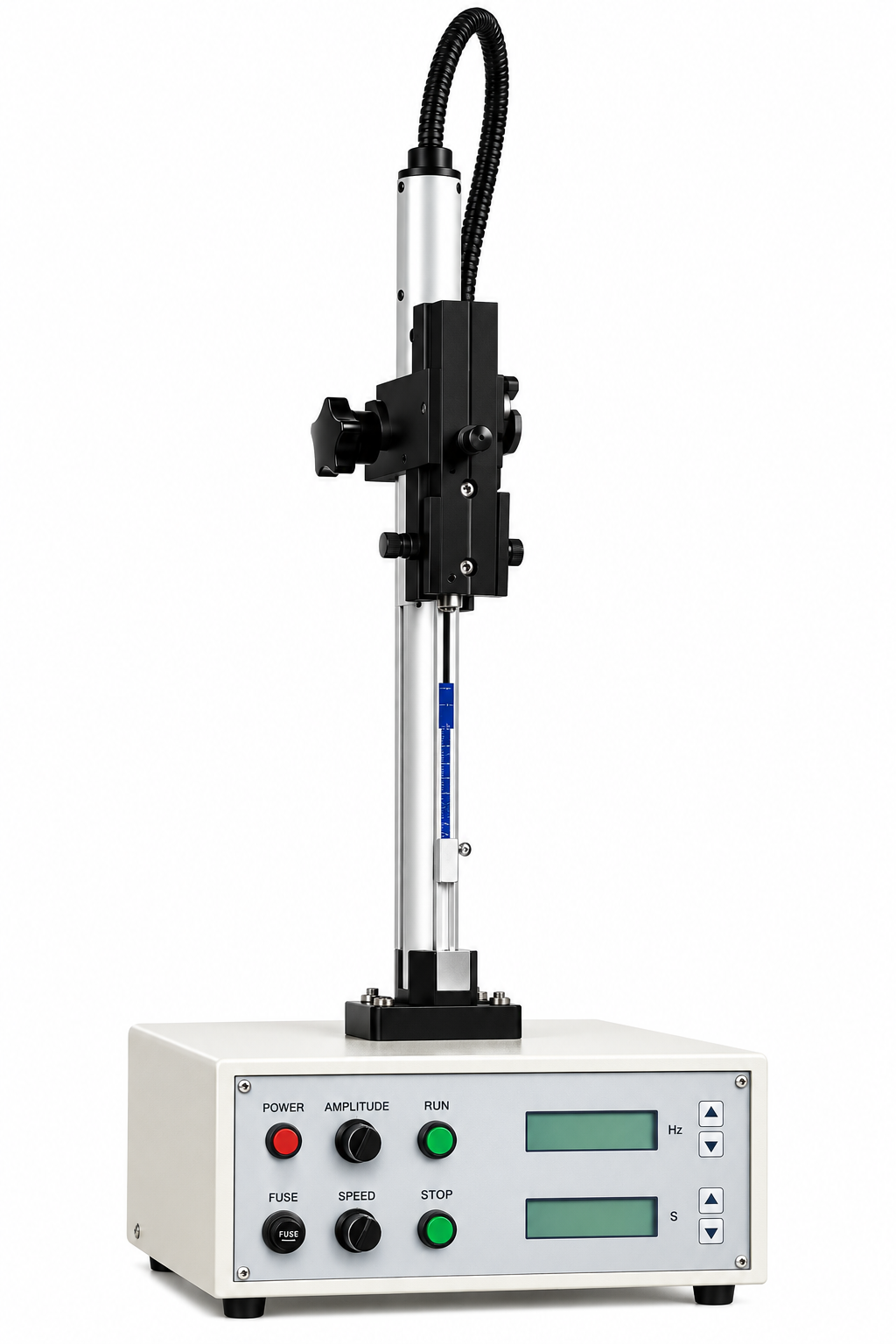
A specialized electrode is immersed in the solution from which the isotopes are to be isolated. This rotating electrode acts as the anode, while the cathode consists of a small metal plate positioned at the bottom of the electrolysis flask or vessel. A controlled direct current is then passed through the solution, triggering electrolysis—the chemical decomposition of the elements within the solution—which results in the deposition of the target isotope(s) onto the metal plate.
System Description
The innovative design of the EDP 7000 offers unique and highly efficient capabilities for the routine use of this type of equipment.
The EDP 7000 is the first instrument constructed entirely from synthetic materials. Given that the measurement environment can sometimes be highly corrosive, the use of these materials ensures exceptional durability. The electrodeposition process generates significant heat within the electrolysis vessel (due to the Joule effect), which often creates practical challenges. This instrument provides a highly effective and cost-efficient solution for sample processing, ensuring optimal results during the capture phase.