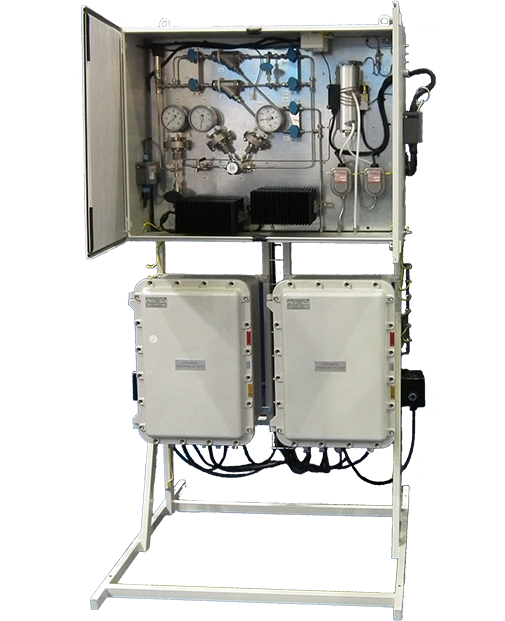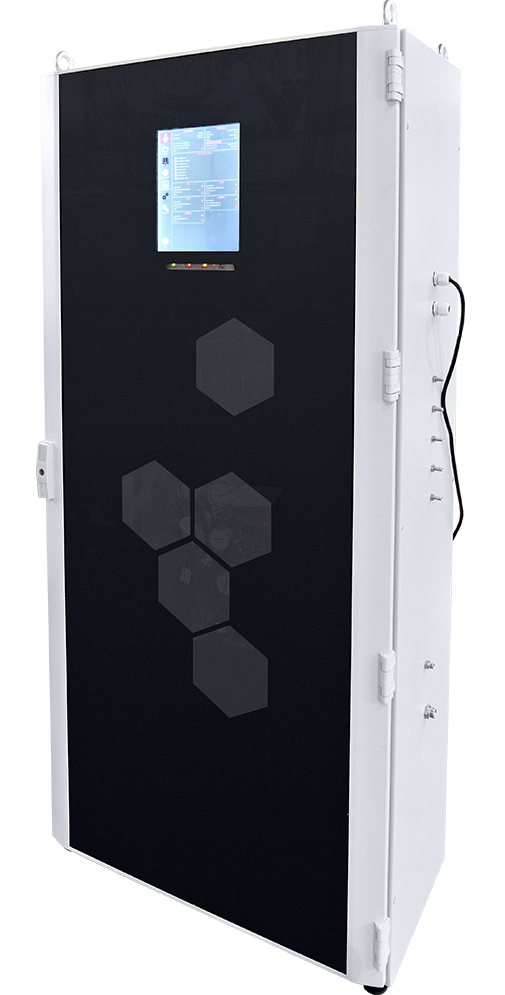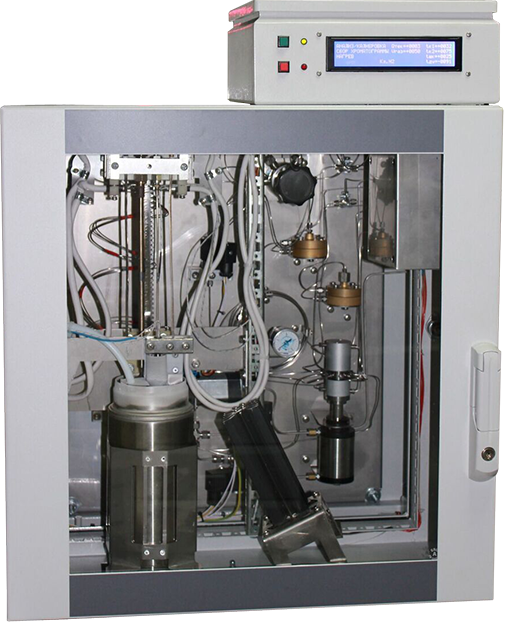
Helium Micro laboratory chromatographic system
The "Helium Micro" laboratory chromatographic system is a specialized, high-tech solution developed by the scientific and technical firm "BAKS" for the precise analysis of helium purity and the rapid detection of trace impurities. This equipment is essential for expert quality control of gaseous and liquid helium—including standard grades A and B, as well as ultra-high-purity grade 6.0 helium. The system enables the highly accurate identification and quantification of components such as neon (Ne), hydrogen (H₂), nitrogen (N₂), methane (CH₄), oxygen and argon (O₂ + Ar), carbon monoxide (CO), and carbon dioxide (CO₂).
System Composition and Design
The architecture of the "Helium Micro" is engineered to ensure maximum sensitivity and reproducibility of results:
High-precision gas chromatograph: Equipped with selective thermal conductivity detectors (TCD) and/or thermochemical detectors. For applications involving liquid helium or grade 6.0 helium, a sensitive dual-channel plasma emission detector (PED) is incorporated.
Automatic cryoconcentration system (ASK-1): A key component responsible for the sorption-based collection and efficient concentration of impurities via extreme cooling with liquid nitrogen, followed by controlled thermal desorption (heating). The design is fully protected against ice formation on the cryoelements.
Continuous liquid nitrogen supply system: Ensures stable, low-temperature conditions throughout the sample concentration process.
Control PC with "Analyzer" software: Specialized software that automates data acquisition, calculates concentrations, records chromatographic peaks, and generates final reports. Key Advantages
Exceptional sensitivity: the minimum detection limit for trace impurities is as low as 2 ppb (for the "Helium-Micro 6.0" configuration).
High speed: a complete chromatographic separation and detection cycle takes no more than 13 minutes.
Cost-effective operation: the system does not require a constant supply of external, ultra-high-purity gases for setup or routine operation.
Process automation: minimization of human error through automated control of the sorption, desorption, and signal-processing cycles.